Reviews

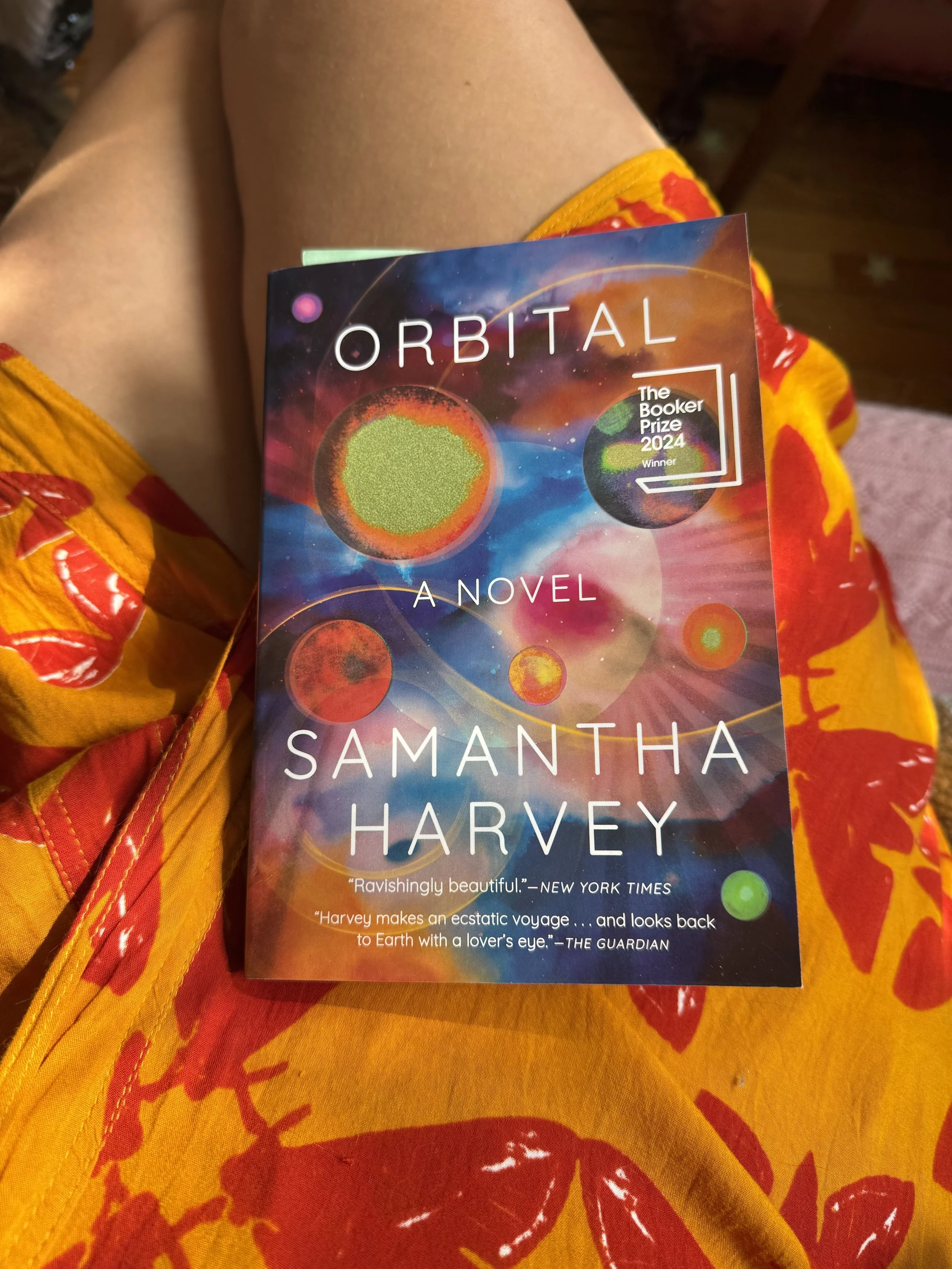
Orbital
In general, I would say that I am not claustrophobic. I’m not a fan of a tight space to be sure, and you’d never find me cave diving, but I can handle an elevator, a flight, a cross-country bus ride. Reading Orbital made me claustrophobic in a way that I’d never even considered before. To be so close to earth, but never able to step outside. To move in the same spaces, the same ways, repeatedly, for months. To never have a break, to never be able to walk off your stress, to never be alone or feel the weight of your own body as you lie down. I’m ill just thinking about it.
I have never understood the lure of space in that way. In the worlds of sci-fi, I favour a space adventure over an existential inquisition into our purpose (if any) in the universe. I don’t particular enjoy seeing man’s psyche collapse under the weight of its own insignificance, the sun streaking through the window of the bridge as death’s imminence becomes meaningless against the scale of what is truly unknown. Luckily Orbital is not that. Or, not only that.
Orbiting 16 times around the earth in their “day”, the four astronauts and two cosmonauts of Orbital reflect on the changing meaning of time, of space. What is a day, when you see so many dawns and dusks? The earth falling suddenly into darkness; strikingly, into the light - on a constant rotation. What is a life when you miss it, when you mourn it, but it belongs to a literal world you cannot touch? What is a body when cut off from all the things you thought made it real? Its heaviness, the way it moves, the constant fight against the thread of gravity and inertia that would keep us ever falling into the dark.
Orbital is about the ways in which we move around each other, the storms that come and go, the ways in which we connect ourselves with the future. It is about the questions; the act of wondering, of wandering; the imperceptibility of life. And like all great novels Orbital is about the breaths, the wants, the things unsaid that make us all gloriously human.